
What is IADC® Therapy?
Psychotherapists today are consistently helping grieving people experience a reconnection with someone who has died, resulting in healing deep sadness associated with grief. The method of facilitating this experience, called “induced after-death communication” or IADC®, was discovered in 1995 by Dr. Allan L. Botkin, Psy.D.
Dr. Botkin’s protocol for IADC®, was derived from Eye Movement Desensitization and Reprocessing (EMDR), an evidenced-based treatment for trauma, but IADC® differs significantly from the standard EMDR protocol. Conducted by a licensed mental health provider, IADC® is a brief psychotherapeutic intervention that generally involves only two treatment sessions, typically 90-minutes each.
IADC® is a psychotherapeutic treatment for grief that has at its core the goal of reducing the intense sadness and emotional distress associated with grief and traumatic loss. When the grief-related sadness surrounding the loss diminishes, clients generally experience a state of calmness, openness, and receptivity. In this state, about two-thirds to three-fourths of clients report experiencing a deep sense of connection with the deceased loved one, which may be experienced through sensory means (sight, sound, smell, taste, etc.) or as a “sense of presence” of the loved one. This sense of connection is a well-researched phenomenon referred to in the scientific literature as “after-death communication” or “ADC,” which has been shown to have significant beneficial impacts related to bereavement (Elsaesser, et al. 2020; Streit-Horn, 2011).
Although the protocol is called “induced after-death communication,” the method does not actually “induce” after-death communication. ADC has an essential quality of being a spontaneous experience that cannot be directly induced. Rather, through diminishing the distressing effects of intense grief-related sadness, IADC® helps to facilitate in the client a state of mind in which ADC is more likely to occur. Most people believe their experiential reconnection is real, but they do not have to believe in the authenticity of the experience to benefit from its profound healing effects.
Consistent, robust clinical observations by a growing number of IADC® trained therapists across a broad variety of clients indicate that IADC® heals the deep sadness that is associated with death of a loved one and the results appear to hold up very well over time. The vast majority of clients who have participated in IADC® therapy report significant improvement in grief-related symptoms.
Results of the first experimental study of IADC® by Dr. Jan Holden and colleagues, which was published in Grief Matters: The Australian Journal of Grief and Bereavement, compared the effects on grief symptoms of two sessions of traditional grief counseling as compared to two sessions of IADC® Therapy. Results of the study indicated that IADC® clients improved significantly more overall than did clients who participated traditional talk therapy for grief. Statistical analyses indicated that 40% of the variance seen in overall grief symptoms was attributable directly to differences in the treatments.
Research is continuing on IADC® Therapy worldwide including studies conducted by the Italian IADC Research Group led by Dr. Claudio Lalla, IADC® Trainer and Coordinator of Italian IADC and a study at the University of Adelaide in Australia, led by Dr. Tom Nehmy, IADC® Therapist. Information about Dr. Nehmy’s study can be found at http://www.HealingGriefWithIADC.com/research.
To learn more about the IADC® protocol, visit the IADC® Therapy Sessions page.
Executive Director
International IADC® Therapy Board
Center for Grief and Traumatic Loss

Dr. Noelle R. St. Germain-Sehr, LPC-S, NCC, ACMHP
(940) 268-4273
nstgermainlpc@gmail.com
In the fall of 2020, IADC® Therapy founder, Dr. Allan Botkin, announced his retirement and appointed Dr. Noelle R. St. Germain-Sehr as the Executive Director of the International IADC® Therapy Board and The Center for Grief and Traumatic Loss.
Dr. St. Germain-Sehr is a Licensed Professional Counselor Supervisor in Texas, a National Certified Counselor and an ACISTE Certified Mental Health Professional trained to assist individuals with integrating spiritually transformative experiences. She is an IADC® therapist and trainer with advanced training and expertise in transpersonal counseling. Dr. St. Germain-Sehr has been in clinical practice since 1993, holds membership in multiple professional counseling organizations, and has served on several editorial and professional boards. Her research focuses on improving mental health providers’ effectiveness in addressing transpersonal issues, especially related to after-death communication. She has several publications and has presented extensively on after-death communication and transpersonal counseling.
IADC® Therapy Founder – Allan L. Botkin, Psy.D.
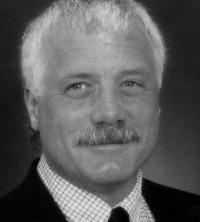
Dr. Allan L. Botkin, Psy.D.
A Message from IADC® Founder Dr. Allan L. Botkin
It has been 25 years since I discovered IADC by accident. I had no idea that the changes I was making to standard eye-movement desensitization and reprocessing (EMDR) would result in my patients consistently experiencing an after death communication (ADC). The only thing that was clear to me at the time was that my patients were healing to a degree that I had thought was not possible.
Along the way, many trusted colleagues joined me in my journey. IADC is now growing all over the world, and continuing research and thousands of cases support its clinical effectiveness. There is no better feeling for a therapist than to witness a client’s tears of pain turn into tears of joy and a sense of peace in just two 90-minute sessions.
Now that I have a great international team to carry on, I have decided to retire. I have complete confidence in those who will continue the mission. The person who will take my place as executive director is Dr. Noelle St. Germain-Sehr. She is an excellent researcher/scientist, an astute clinician, and an enthusiastic administrator. IADC is in good hands.
Allan Botkin, Psy.D., clinical psychologist and IADC founder
The International IADC Board
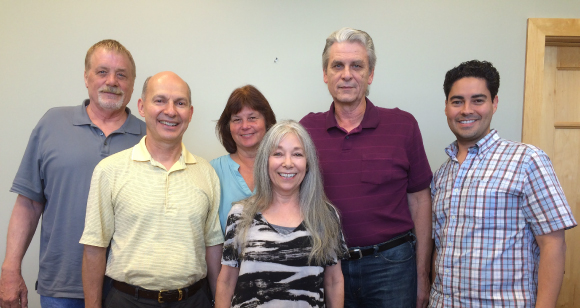
From L to R, Al, Gary, Juliane, Mo, Graham, and Cesar.
Dr. Noelle St. Germain-Sehr and The Center for Grief and Traumatic Loss, would like to introduce the members of The International IADC® Board. In addition to Dr. St. Germain-Sehr, the members are as follows.
Juliane Grodhues, Dipl.-Psych., Director of European IADC. Juliane is an IADC® therapist and certified IADC® trainer. She is also the founder and director of the “Allan Botkin Institut Deutschland” in Saarbrucken, Germany.

César Valdez, MSW
César Valdez, MSW, Associate Clinical Director of IADC. César is an IADC® therapist and certified IADC trainer. He serves as the liaison between the EMDR and IADC® communities and is in Ann Arbor Michigan. César co-authored a chapter on IADC® Therapy in the book New techniques of grief therapy: Bereavement and Beyond by Robert Neimeyer, a prominent figure in the field of grief therapy. César offers individual and small group IADC® training for licensed mental health professionals virtually. To contact César or to learn more about IADC® training see his website at www.iadctherapy.com.

Graham Maxey, MA, M.Div., LPC., Clinical Director of IADC®. Graham is an IADC® therapist and certified IADC® trainer. His practice is in Arlington Texas. He is also very involved in establishing IADC® in Europe. Graham’s collaborated on a control group design study of IADC completed with Dr. Jan Holden at the University of North Texas and with development of design of this web site for IADC® therapists worldwide. Graham provides individual and small group training in IADC® Therapy for licensed mental health providers in person and virtually. To contact Graham or to learn more about IADC® training, you can email him at zephat@swbell.net or call (682) 262-6758.
Mo Hannah, Ph.D., Director of IADC Research. Dr. Hannah is a professor of psychology at Siena College in New York and an IADC® therapist. She also serves as the Director of IADC® Research and has authored peer reviewed journal articles on IADC®.

Claudio Lalla MD, PsyD.
Claudio Lalla MD, PsyD., Coordinator of Italian IADC. Dr. Lalla is an IADC® therapist and certified IADC® trainer. Dr. Lalla graduated in Medicine and Psychology at University of Rome. He specializes in psychodynamic psychotherapy, cognitive-behavioral therapy and family therapy. Dr. Lalla wrote a book on IADC® titled Perdita e Ricongiungimento (Loss and Reunion). Dr Lalla’s personal website is www.claudiolalla.it. The website of Italian IADC therapists is www.iadctherapy.it.
All of the above are excellent representatives of IADC and are available for speaking engagements and interviews.
Contact information for each member is provided in the Trained Therapists section of this web site.


 In January 2011 the "Allan Botkin Institute" opened in Saarbrucken Germany. For more information on German and European IADC®, go to
 IADC is now rapidly growing in Italy and France. Induced After Death Comm-unication has been recently translated and published in Italian and French.